



Multiversal Mastery: A Strategic Compendium for Marvel Rivals
The superhero shooter genre has reached a new evolutionary peak with the arrival of Marvel Rivals. Far from being a mere imitation of its contemporaries, this title introduces a high-speed, destructible, and vertically-inclined combat system that demands a deep understanding of team-based synergy and environmental manipulation. To succeed in the Chronos-distorted battlefields, a player must move beyond basic aim and cooldown management, delving instead into the complex "Team-Up" ability trees and the tactical implications of a fully destructible map. This guide is designed to transform your understanding of the game’s core mechanics, providing the high-level strategies necessary to dominate the ranked ladder and master the iconic roster of the Marvel Multiverse.
1. The Pre-Match Blueprint: Understanding Team-Up Synergies
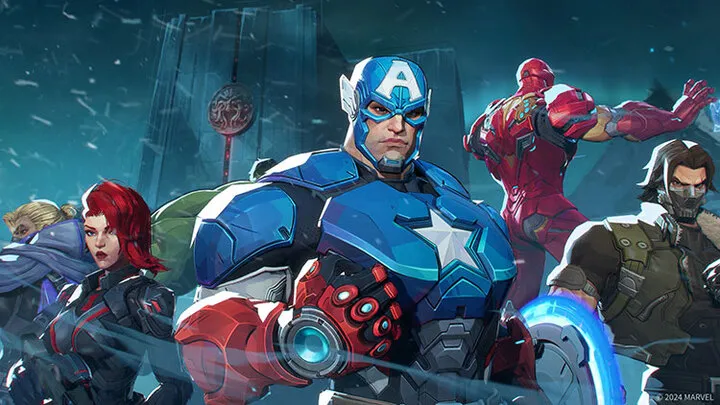
In Marvel Rivals, victory is often decided in the hero selection screen through the "Team-Up" system. Unlike traditional shooters where character interactions are purely cosmetic, Marvel Rivals features specific mechanical bonuses when certain heroes are paired. For example, the "Gamma Charge" synergy between Hulk and Iron Man allows Hulk to charge Iron Man's armor with Gamma radiation, significantly boosting his energy blast damage. Mastering these pairings is the first step in creating a team composition that is greater than the sum of its parts.
Strategic drafting requires a balance between the three primary roles: Vanguard, Duelist, and Strategist. However, a deep-level tip is to look for "Cross-Role Synergy." Pairing a Strategist like Luna Snow with a high-mobility Duelist like Spider-Man allows for "Cryo-Tagging," where Luna’s healing tether provides Spider-Man with an aura that slows nearby enemies. This turns a standard flanking maneuver into a devastating crowd-control event. Always prioritize filling at least one Team-Up link to gain that specific tactical edge over an uncoordinated enemy team.
2. Verticality and Web-Slinging: Mastering 3D Movement
The maps in Marvel Rivals are designed with extreme verticality, favoring heroes who can dominate the skyline. Heroes like Iron Man, Rocket Raccoon, and Spider-Man operate in a 360-degree combat sphere. For ground-based Vanguards like Bruce Banner, the challenge is "Z-Axis Awareness." You must learn to use the environment to cut off lines of sight from above. Deep-level play involves "Corner-Camping the Sky," where flying heroes hover just behind rooftop edges to break the aim-assist and line-of-sight of hitscan characters.
Advanced Movement Techniques
- Physics-Based Swinging: Spider-Man’s web-swinging utilizes a momentum-based engine. To maximize speed, release your web at the bottom of the arc and immediately follow with a zip-jump.
- Flight Feathering: For flying heroes, don't hold the ascend button. "Feathering" the thrust allows you to maintain altitude while keeping your fuel gauge from depleting, extending your airtime by up to 30%.
- Wall-Running Transitions: Magik and Black Panther can transition from a wall-run into a plunging attack. This resets their dash cooldown, allowing for "Infinite Vertical Chasing" against fleeing flyers.
3. Environmental Demolition: The Geometry of Destruction
One of the most profound mechanics in Marvel Rivals is the fully destructible environment. Walls, bridges, and pillars aren't just cover—they are temporary. A Vanguard can use a high-impact ability to collapse a bridge, dropping an enemy sniper into a pit or cutting off a primary flanking route. Understanding the "Structural Integrity" of the map is vital; if you see an enemy hiding in a bell tower, don't climb to meet them—destroy the base of the tower to bring them down to your level.
Strategic Demolition Tips
- Removing Cover: Use projectile-heavy heroes like The Punisher to systematically strip away the enemy’s pillars during the poke phase.
- Creating Sightlines: Use Iron Man’s Uni-Beam to punch holes through walls, allowing your snipers to take shots from unexpected angles.
- Debris Trapping: Large falling chunks of buildings deal massive "Impact Damage." Timing a building collapse to land on a stunned enemy is a reliable way to secure a kill without using an Ultimate.
4. The Vanguard’s Burden: Space Creation and Aggro Management
The Vanguard (Tank) role in Marvel Rivals is not just about soaking damage; it is about "Physical Presence." Heroes like Groot can create literal walls of wood to segment the enemy team. The technical mastery of a Vanguard involves "Aggro-Siphoning." By diving into the backline and utilizing defensive cooldowns (like Hulk’s Gamma Shield), you force the enemy Duelists to turn their backs on your team. This half-second of distraction is the window your team needs to secure a pick.
To optimize your Vanguard play, master the "Body-Block." Because character models in Marvel Rivals have physical collision, a large hero like Peni Parker can stand in a doorway and physically prevent an enemy from escaping a localized ultimate. This "Spatial Denial" is often more valuable than raw damage. Use your health pool as a resource to buy time, but always keep a "Retreat Ability" in reserve; a dead tank provides zero space for the team.
5. Duelist Dynamics: The Art of the Precision Assassination
Duelists are the primary damage dealers, but playing them effectively requires a "Predator Mindset." Whether you are playing the hitscan-heavy Punisher or the melee-focused Black Panther, your goal is "Target Prioritization." In Marvel Rivals, the Strategists (Healers) are high-value targets. A Duelist who spends the whole match shooting at the enemy tank is wasting their potential. You must use your mobility to bypass the "Frontline Screen" and delete the enemy's sustain.
Duelist Archetypes
- Flankers (Spider-Man, Black Panther): Focus on isolation. Use your mobility to find the enemy Luna Snow or Mantis while they are distracted by the main fight.
- Mid-Range Hitscan (The Punisher, Star-Lord): Focus on "Shield Pressure." Your job is to break the enemy Groot’s walls or Dr. Strange’s shields so your team can push.
- Air-Superiority (Iron Man, Storm): Focus on "Area Denial." Use your height advantage to rain down pressure on the objective, forcing the enemy to stay under cover.
6. Strategist Supremacy: Beyond Simple Healing
Strategists in Marvel Rivals are often the most mechanically complex heroes. A good Strategist like Loki doesn't just heal; they manipulate the battlefield. Loki can create illusions that draw fire and confuse the enemy’s auto-aim abilities. The "Healing Throughput" is only half the battle; the other half is "Utility Maximization." For example, Mantis can provide a damage boost that allows a Duelist to hit specific "One-Shot Thresholds" they couldn't reach alone.
Advanced Strategist Techniques
- Illusion Placement: As Loki, place your illusions in "Sniper Nooks." Enemies will waste high-damage cooldowns on them, thinking they’ve found a flanking support.
- Ultimate Tracking: Strategists usually have the best view of the battlefield. It is your job to track which enemy Ultimates have been used. Call out when the enemy Iron Man has his "House Party Protocol" ready so your team can seek cover.
- Aggressive Supporting: Luna Snow can freeze enemies. Don't just wait to be attacked; use your freeze defensively to peel for yourself or offensively to set up a kill for your Vanguard.
7. Ultimate Economy: Managing the "Win Buttons"
Ultimates in Marvel Rivals are game-changing, but they should rarely be used in isolation. The most effective way to use an Ultimate is through "Staggered Combos." For instance, Magneto’s Ultimate can pull the entire enemy team into a single point, which is the perfect setup for Storm’s "Elemental Burst." Using two Ultimates to wipe a team is efficient; using five is a waste that will leave you vulnerable in the next round.
The "Panic Ult" Trap
One of the biggest mistakes in high-level play is the "Panic Ultimate." This happens when a player is about to die and triggers their Ultimate in a desperate attempt to stay alive. In 90% of cases, this results in the player dying anyway and losing their charge. Learn to "Accept the Death." Dying with 100% Ultimate charge allows you to respawn and initiate a coordinated push with your team, which is far more valuable than a wasted "Win Button."
8. Map Awareness: Navigating Chronos-Specific Hazards
The maps in Marvel Rivals are not static stages; they are living entities with "Environmental Hazards." Some maps feature shifting platforms or "Temporal Rifts" that can teleport players to different sections of the arena. Mastering the "Map Flow" means knowing exactly where the health packs are located and which structures provide "Permanent Cover" (objects that cannot be destroyed by normal abilities).
Key Map Features to Exploit
- High-Ground Anchors: Identify the "Power Positions" on each map. These are spots that offer a clear view of the objective while providing a quick retreat path to a health pack.
- Environmental Hazards: Some maps have "Death Pits." Heroes with knockback abilities (like Dr. Strange or Star-Lord) should prioritize fighting near these edges for easy "Environment Kills."
- Destructible Shortcuts: Look for thin walls that can be destroyed to create a new, unexpected flanking path directly into the enemy's rear.
4. Resource Management: CD Cycles and Energy Pools
Every ability in Marvel Rivals has a "Cooldown Cycle." High-level mastery involves internalizing these timers—not just for your own hero, but for your opponents. If you see a Spider-Man use his "Web-Zip" and "Swing," you know he is out of mobility for the next 4 seconds. This is your window to punish him. Tracking "Ability Spends" is the difference between a successful dive and a suicide mission.
The "Empty Tank" Strategy
Wait for the enemy Vanguard to use their primary defensive ability (like Dr. Strange's shield). Once that ability goes on cooldown, the "Tank is Empty." This is the signal for your entire team to focus fire on that Vanguard. In Marvel Rivals, a tank without a cooldown is just a large target. Coordinate your team to "Force the Spend"—bait out the defensive move, retreat for three seconds, and then engage with everything you have.
10. The Ranked Climb: Mental Fortitude and Communication
The final and most important tip for Marvel Rivals is "Communication Density." This doesn't mean talking constantly; it means providing short, actionable information. "Iron Man low," "Groot no wall," or "Loki behind" are the types of calls that win games. Because the game is so fast-paced, long sentences are lost in the noise. Keep your comms "Clean and Lean."
Staying Tilt-Proof
- Role Flexibility: While it's good to have a "Main," being able to flex to a Strategist when your team needs one will win you more games than being a "One-Trick" Duelist.
- Reviewing VODs: Watch your deaths. Did you die because of bad aim, or because you were standing in an "Exposed Sightline"? Most deaths in Marvel Rivals are due to poor positioning, not mechanical skill.
- Positive Reinforcement: Superheroes work better as a team. Acknowledging a good play by your Strategist keeps the team morale high, which is essential for making a comeback in a 0-2 deficit.
Conclusion
Marvel Rivals is a high-octane celebration of superhero combat that rewards those who can think as fast as they can aim. By mastering the intricate Team-Up synergies, exploiting the destructible geometry of the maps, and maintaining a disciplined Ultimate economy, you can rise above the chaos of the multiverse. Whether you are swinging through the skyscrapers of Tokyo 2099 or defending the halls of Asgard, remember that you are part of a team. The greatest power in this game isn't a Gamma Blast or a Repulsor Ray—it's the synchronization of six heroes working as a single, unstoppable force. Step through the rift, hero; the battle for the timeline has just begun.